Lake Superior Lithium
Canada is positioned to become a global leader in supplying lithium for the new economy. But without domestic refining capacity, we risk being dependent on foreign supply chains and missing out on key economic opportunities in our communities. The Lake Superior Lithium Project can change that.

Lithium is the backbone of the global electric vehicle revolution and the green technology transition. From grid-scale storage to solar and wind energy systems, utilities and renewable industries rely heavily on this critical mineral to power the new economy. And Canada has an abundance of it.
But we currently export this critical mineral for processing abroad, losing out on a high-value economic opportunity at a time when our allies are aggressively building non-Chinese lithium supply chains and our province is actively building an integrated EV battery supply ecosystem.
The Lake Superior Lithium Project can put Thunder Bay Ontario at the centre of that supply chain, reducing Canada’s reliance on overseas suppliers and strengthening control over our own critical mineral production.
The Project
Lake Superior Lithium (LSLi) -- a wholly-owned subsidiary of Avalon Advanced Materials -- is proposing to build a lithium hydroxide processing facility in Thunder Bay, Ontario, designed to convert spodumene (a lithium bearing mineral) concentrate into battery-grade lithium hydroxide, a key material used in electric vehicle batteries and energy storage systems.
The project is planned as a phased long-term operation, with an estimated operating life of approximately 30 years, providing 30,000 tonnes per year of production and 130 new permanent, full-time jobs in Phase 1 and an estimated $22B in expected economic gains for the city of Thunder Bay over the life of the LSLi project. Phases 2 and 3 are planned to add an additional 15,000 tonnes per year and 30-35 positions for each phase.
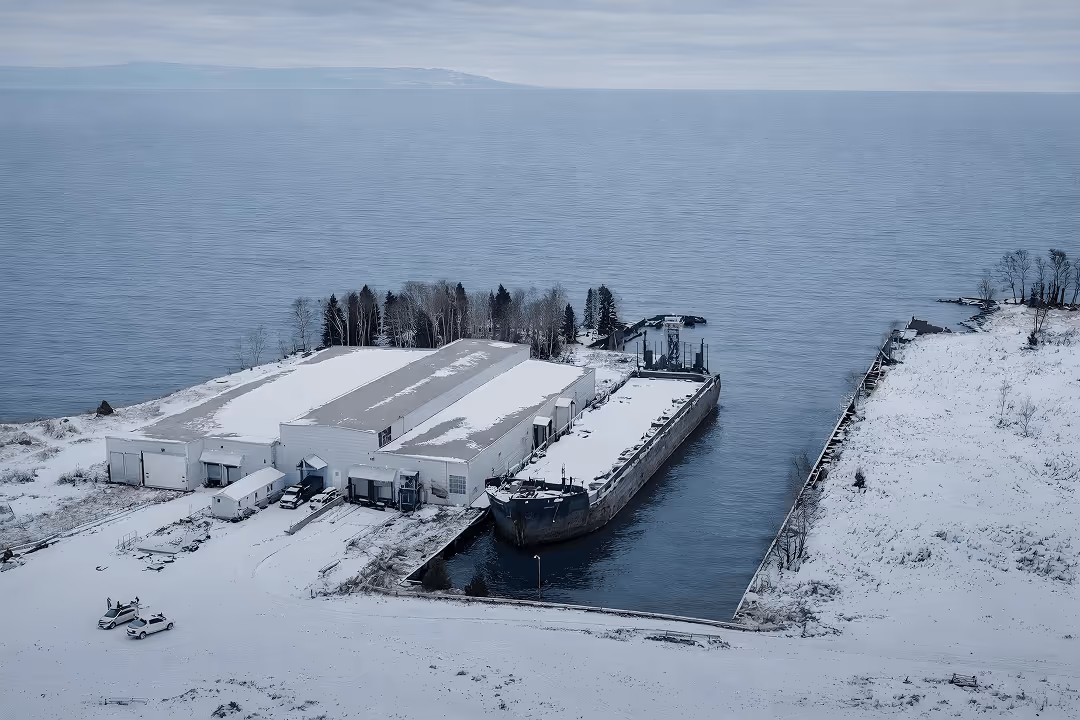
Repurposing and revitalizing the old pulp and paper mill located at 965 Strathcona Avenue, the first phase of the facility is designed to process approximately 220,000 tonnes of spodumene concentrate per year, producing 30,000 tonnes of lithium hydroxide annually or enough to power roughly half a million electric cars. Phases 2 and 3 are anticipated to produce 15,000 tonnes each for a total of 60,000 tonnes.
Watch this short video to see our plans for the site.
Spodumene concentrate is expected to be delivered to the site by rail and/or by ship through the deep-water port at Thunder Bay or the facility’s own dock while finished lithium hydroxide is expected to be transported using rail, road, and/or port infrastructure connected to the Thunder Bay site. The proposed facility will use proprietary technologies from Metso Corporation that streamline refining, providing a environmentally sustainable route to convert spodumene to battery-grade lithium hydroxide. You can learn more about this proven process here.
LSLi has also made it clear priority to source and purchase feedstock locally within Ontario as new production comes online.
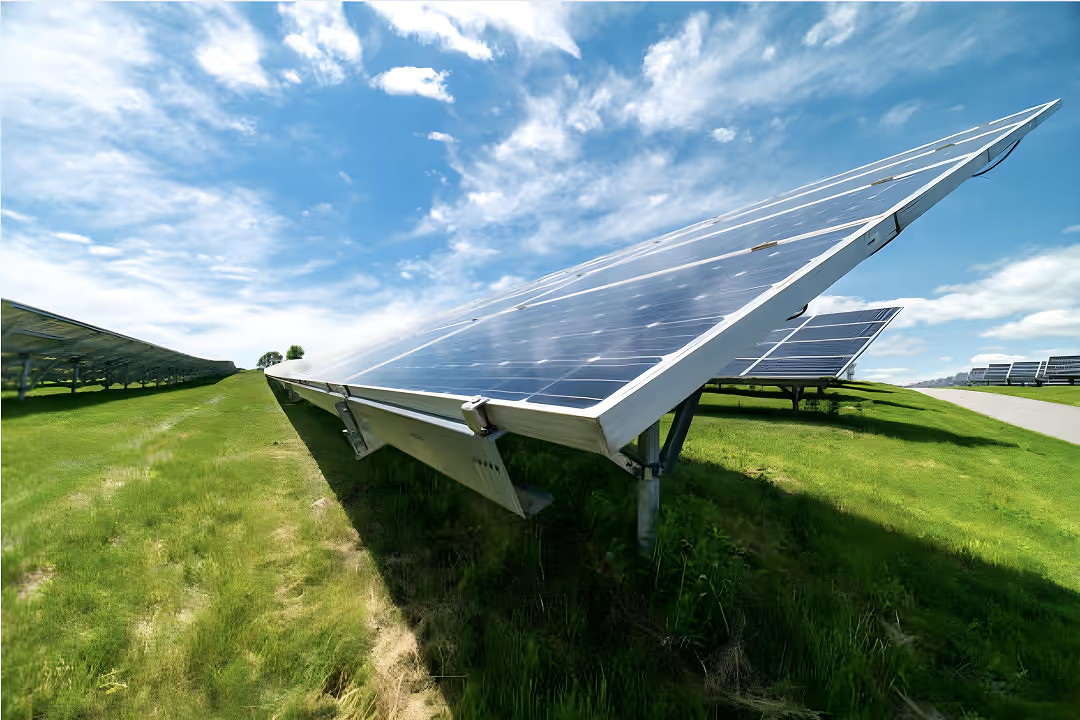
To offset electricity consumption associated with lithium hydroxide production and ensure this project aligns with LSLi’s broader ESG objectives and efforts to reduce carbon intensity, we are evaluating the feasibility of constructing a 10-13 MWe (AC) solar photovoltaic facility at or near our site. Plans for this proposed plant would be grid-connected so any excess energy could be used locally and it is expected to generate between 13–15 GWh, the equivalent of powering 1,200 -1,400 homes a year.
The Technology & Innovation Centre (TIC) is envisioned to enhance operational efficiency and continuous improvement at the proposed lithium hydroxide processing facility while serving as a regional hub for collaboration, innovation, and applied research. The TIC will support in-house technology development and provide a platform for partnerships with industry, startups, and academic institutions.
By integrating education, innovation, and operations, the TIC will help bridge research and real-world application while building the skilled workforce needed to support Canada’s critical minerals supply chain.

Why Thunder Bay?
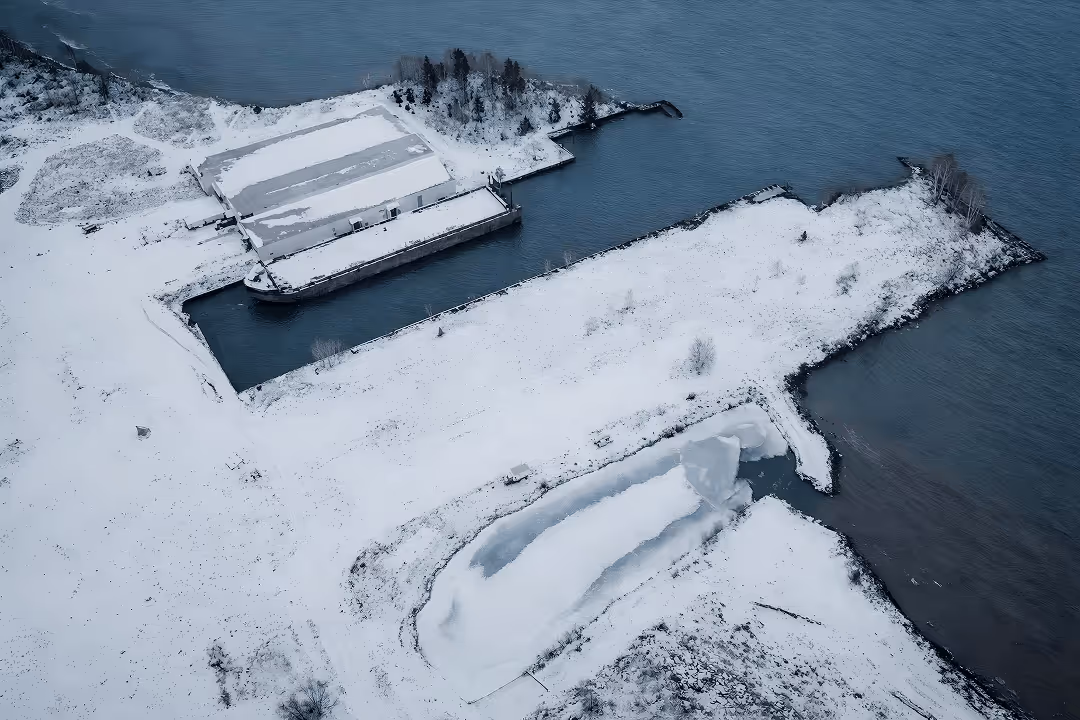
Thunder Bay is uniquely positioned to host this nation-building project. As a central hub near emerging supply sources and surrounded by several mines at various stages of development, it benefits from existing rail and road infrastructure to support efficient distribution.
The refurbishment of the site’s deep-water port as well as the restoration of the old pulp and paper mill will breathe new economic life back into existing assets, adding considerable economic value to the community without significantly increasing the area’s industrial footprint.
Benefits to the Community
$22B in expected economic gains for the city of Thunder Bay over the life of the LSLi project.
130 New permanent, full-time jobs in Phase 1 for millwrights, mechanics, electricians, engineers, operators, and support staff in the community.
$975M in estimated income for local workers over the life of the LSLi project.
Proposed new solar farm will not only power the facility, but any excess energy will be put back on the grid to support renewable, local energy generation in the community.
Future partnerships with Lakehead University, Confederation College and regional workforce development stakeholders will create a specialized programs & on-site training to support a regional workforce pipeline.
The METSO Difference
We’ve partnered with the Metso Corporation to incorporate state-of-the-art technology into our refining process.
Where most processing facilities produce tailings or low-value waste, our process generates a potentially valuable by-product called analcime that can be used in the production of a low-carbon concrete. This innovative process not only curbs ecological impact while producing the battery-grade lithium hydroxide, but also produces a green building material—doubling the impact Thunder Bay will have on Canada’s clean-tech economy.
Learn more about the Metso process here.
Project Timelines
FAQ
It is not a mine. The proposed project is a processing facility would serve as a critical middle step in the battery supply chain, converting lithium minerals into battery‑grade lithium hydroxide that can be used by battery and electric vehicle manufacturers in Canada and North America.
The proposed facility would serve as a critical middle step in the battery supply chain, converting lithium minerals into battery‑grade lithium hydroxide that can be used by battery and electric vehicle manufacturers in Canada and North America.
By processing lithium domestically rather than shipping it overseas for refining, the project helps strengthen Canada’s clean‑energy supply chain, reduce dependence on foreign processors, and support the growth of electric vehicle manufacturing closer to home. This approach helps create more value, jobs, and expertise within Canada while supporting the transition to cleaner transportation.
Yes. The project uses established industrial processing methods widely used in industrial mineral processing facilities around the globe. The main by-products of this include analcime solids, and crystallized salts from the water treatment systems and these materials will behandled, stored, reused, or disposed of in accordance with strict provincial and federal environmental regulations.
Key environmental considerations include air emissions, water use, wastewater treatment, chemical handling, and solid material management. These are common considerations for industrial facilities and are managed through engineering controls, monitoring systems, and regulatory limits.
Environmental risks will be identified early in project design and addressed through proven engineering controls, monitoring programs, and regulatory oversight
Environmental protection measures will be reviewed and approved by regulators and form part of our public consultation process before the project can proceed.
That said, the facility is being designed with advanced water treatment and recycling systems in place to minimize discharge. Avalon is currently conducting technical studies to determine whether treated water could be safely discharged to a municipal system or whether a zero‑liquid‑discharge approach is most appropriate. The final approach will be confirmed during engineering and permitting.
The facility will also be designed with multiple safety protection systems, including secondary containment, leak detection systems, regular inspections, and employee training. Emergency response plans will be developed in coordination with local authorities and the public. These measures are intended to prevent incidents and ensure rapid response if unexpected events occur.
And finally, the Metso Process (described above) is designed to minimize tailings or transform low-value waste into a commercially valuable material: a low-carbon cement substitute that can reduce CO₂ emissions in construction.
The project will require a series of municipal, provincial, and federal permits and approvals before construction can begin. These include environmental permits related to air emissions, water use, wastewater management, and land use.
All approvals are subject to regulatory review, and the project must demonstrate that it meets strict environmental, health, and safety standards before proceeding.
Key regulatory authorities include Fisheries and Oceans Canada and Transport Canada at the federal level, as well as the Ontario Ministry of the Environment, Conservation and Parks, local conservation authorities, and the municipal government.
Compliance with permits and applicable legislation represents only part of our approach; we are committed to exceeding these requirements through proactive measures, enhanced environmental safeguards, and continuous performance improvement.
The facility would be subject to ongoing inspections, monitoring, and reporting requirements set by provincial and federal regulators. Environmental performance data must be submitted to authorities as a condition of operating permits and publicly available project documents, including environmental studies and permits, will be made available through government regulatory registries and as well as on this website as they are released through the regulatory process.
Public information sessions are expected tobe held as the project progresses through key milestones, including permitting and environmental review. Details on timing, location, and format will be shared with the community in advance through public notices and via this website.
LSLi is committed to open, ongoing engagement and to responding to questions in a timely and respectful manner. You can direct any questions to Glen Smith, our Community Liaison Officer on the ground in Thunder Bay [Insert Contact Info]
The project is expected to create approximately 130 permanent jobs during operations, including roles in operations, maintenance, administration, and management. Additional jobs would be created during the construction phase, which would be temporary.
All told, $22B is expected in economic gains for the city of Thunder Bay along with $975M in estimated income for local workers over the life of the LSL project.
LSLi intends to prioritize local and regional hiring where possible. Training and skills development opportunities are expected to be explored as the project advances, in coordination with local institutions and workforce partners.
The project is located within the traditional territory of Fort William First Nation and within the territory of the Métis Nation of Ontario Region 2 and the Red Sky Métis Independent Nation. Initial engagement has included meetings and information sharing with Fort William First Nation leadership, with plans for continued consultation through meetings, public information sessions, and community engagement activities.
Currently, no other lithium conversion refineries of this type are operating in Canada. Meeting the projected North American demand for battery-grade lithium chemicals will require multiple facilities, not just one.
Avalon’s planned refinery focuseson producing lithium hydroxide, which is the preferred chemical for supplying high‑nickel cathode battery manufacturing. Other announced projects in Canada are targeting different end products, such as lithium carbonate, which serves different battery chemistries and downstream markets.
Because the market requires a mix of lithium chemicals, and projected demand far exceeds the capacity of any single facility, Avalon’s refinery complements, rather than duplicates, other planned projects.
Project Updates
Get Updates
Want to be informed when key milestones are met? When public consultations are scheduled? When our Environmental Assessment is complete? Sign-up to stay up to date on all the latest project news.